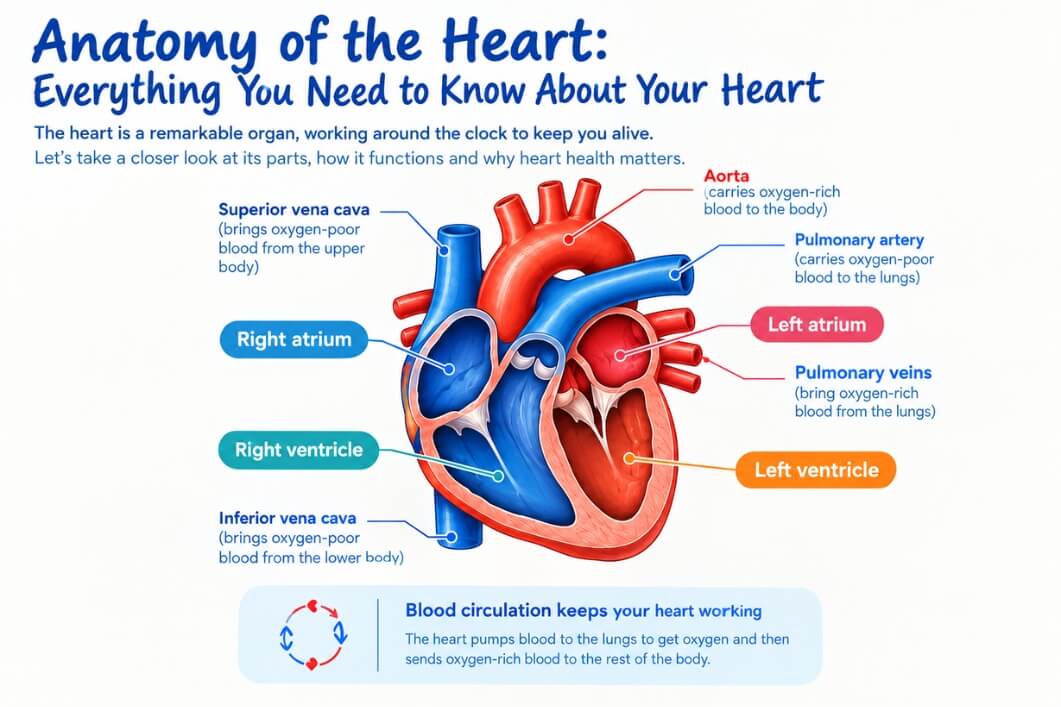
The heart is one of the most important organs in the human body. It works continuously, day and night, pumping blood to every part of the body. With every heartbeat, it supplies oxygen and essential nutrients to our organs while helping remove waste products. Yet, despite being such a vital organ, many people know very little about the anatomy of the heart or how it actually works.
On World Heart Day, observed every year on 29 September, it is an opportunity to understand this remarkable organ, recognise the importance of heart health, and learn how early care can make a difference.
What Is the Heart and Where Is It Located?
The heart is a muscular organ located in the chest, between the lungs and slightly towards the left side. It is approximately the size of a person's clenched fist.
Although the heart may look like a single organ, it consists of several important parts that work together to maintain blood circulation throughout the body. Understanding the parts of the heart and their functions can help people better understand why heart health is so important.
The Four Chambers of the Heart
One of the most important aspects of the anatomy of the heart is its four chambers. These chambers work together to receive and pump blood.
1. Right Atrium
The right atrium receives blood that has already travelled through the body and is low in oxygen. This blood needs to be sent to the lungs to receive fresh oxygen.
2. Right Ventricle
The right ventricle receives blood from the right atrium and pumps it towards the lungs through the pulmonary artery. In the lungs, the blood releases carbon dioxide and picks up oxygen.
3. Left Atrium
Once blood receives oxygen in the lungs, it returns to the heart through the pulmonary veins and enters the left atrium.
4. Left Ventricle
The left ventricle is the strongest chamber of the heart. It pumps oxygen-rich blood through the aorta to the rest of the body. Because it has to send blood throughout the body, its muscular wall is thicker than that of the other chambers.
Together, these four chambers keep the heart's pumping function working continuously.
Heart Valves: Keeping Blood Flowing in the Right Direction
The heart contains four main valves that act like doors. They open and close with each heartbeat to ensure that blood flows in the correct direction and does not flow backwards.
These include:
- Tricuspid valve – controls blood flow between the right atrium and right ventricle.
- Pulmonary valve – controls blood flow from the right ventricle to the lungs.
- Mitral valve – controls blood flow between the left atrium and left ventricle.
- Aortic valve – controls blood flow from the left ventricle into the aorta.
Healthy heart valves are essential for normal heart function and efficient blood circulation.
Blood Vessels: The Heart's Transport Network
The heart cannot work alone. It is connected to a vast network of blood vessels that carries blood throughout the body.
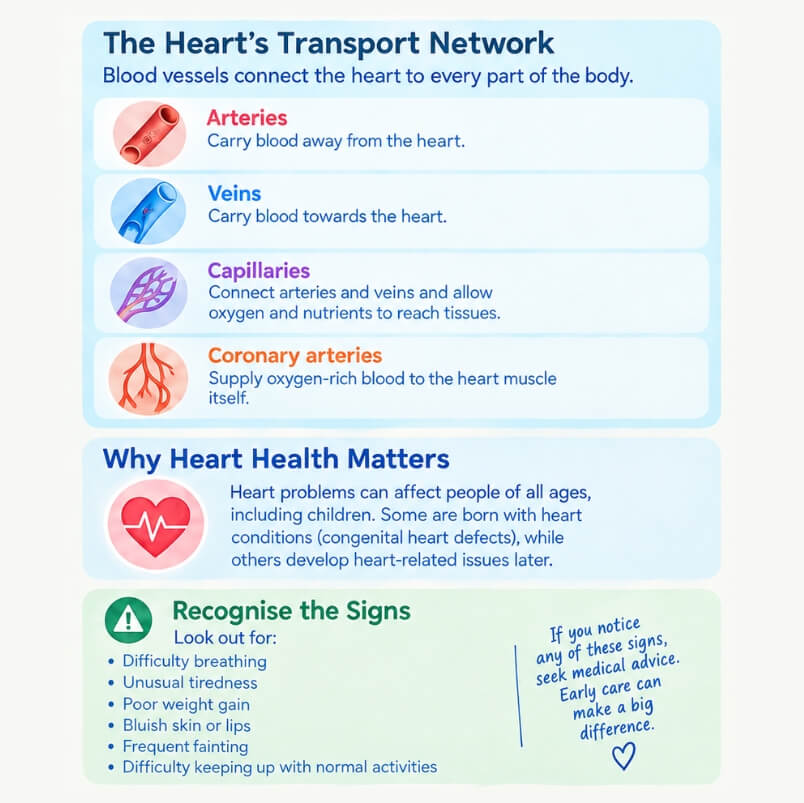
Arteries generally carry blood away from the heart, while veins generally carry blood towards the heart. Tiny blood vessels called capillaries connect arteries and veins and allow oxygen and nutrients to reach the body's tissues.
The coronary arteries are particularly important because they supply oxygen-rich blood to the heart muscle itself.
Understanding the relationship between the heart and blood vessels is an important part of learning about how the heart works.
How Does the Heartbeat Work?
A heartbeat may seem simple, but it is the result of a carefully coordinated electrical system.
The heart has specialised cells that produce electrical signals. These signals tell the heart when to contract and relax.
When the heart contracts, it pushes blood out of its chambers. When it relaxes, its chambers fill with blood again.
This happens continuously, allowing blood to travel through two major circulation routes:
Heart → lungs → heart: Blood travels to the lungs to receive oxygen and release carbon dioxide.
Heart → body → heart: Oxygen-rich blood is pumped to the body, while oxygen-poor blood returns to the heart.
This continuous cycle ensures that the brain, muscles, organs and other tissues receive the oxygen and nutrients they need.
Why Is Heart Health Important?
Heart health is important at every stage of life. Heart problems can affect people of all ages, including children. Some children are born with heart conditions known as congenital heart defects, while others may develop heart-related problems later.
Warning signs can vary depending on the condition and age of the child. They may include difficulty breathing, unusual tiredness, poor weight gain, bluish skin or lips, frequent fainting, or difficulty keeping up with normal activities. These symptoms can have many causes, so medical evaluation is important rather than assuming they are caused by a heart condition.
Early detection and appropriate medical care can help children receive the treatment they need at the right time.
Understanding Heart Disease in Children
When people think about heart disease, they often associate it with adults. However, children can also experience heart-related conditions.
Congenital heart disease in children refers to heart problems that are present from birth. These conditions can affect the heart's chambers, valves, blood vessels or the way blood flows through the heart.
Depending on the condition, a child may require regular monitoring, medication, surgery or other forms of treatment. Medical professionals can determine the appropriate course of care based on the child's individual needs.
Awareness about children's heart health can encourage families to recognise concerning symptoms and seek timely medical advice.
Child Help Foundation's Support for Children with Heart Conditions
For families facing a child's heart condition, timely medical care can be life-changing. However, accessing treatment can be challenging for families with limited financial resources.
Child Help Foundation (CHF) supports children who require critical medical assistance through its Emergency Medical Support programme. The initiative helps children access essential treatment for serious health conditions, including heart-related illnesses.
Through this programme, CHF has supported children requiring treatment for heart disease, helping families access necessary medical care when financial limitations could otherwise become a barrier. CHF has supported more than 400 children with heart disease through its medical intervention efforts.
CHF's work reflects the importance of making essential healthcare accessible to children who need it. Supporting a child's health can also help protect their education, development and future opportunities.
How Can We Support Better Heart Health?
Taking care of the heart begins with awareness. Healthy habits such as eating a balanced diet, staying physically active, getting adequate sleep and avoiding tobacco exposure can contribute to overall health.
For children, regular health check-ups and attention to unusual symptoms can help identify potential concerns early. Parents and caregivers should consult a qualified healthcare professional if they notice symptoms that may require medical attention.
Most importantly, heart health is not only about preventing illness. It is also about ensuring that people living with heart conditions receive timely diagnosis, treatment, care and support.
Every Heartbeat Matters
The heart may be small in size, but its role is enormous. From its four chambers and valves to its electrical system and network of blood vessels, every part works together to keep the body alive.
This World Heart Day, understanding the anatomy of the heart is one small but meaningful step towards taking better care of it. Learning about heart function, heart health, and the parts of the heart can help people become more aware of this vital organ.
For children living with heart conditions, timely treatment can mean more than recovery; it can mean the opportunity to return to school, play, grow and dream about the future.
Because every heartbeat carries a promise of another tomorrow.