CSR used to be seen as something companies did out of goodwill. Today, under Section 135 of the Companies Act, 2013, it's a legal obligation for eligible companies in India. If you're a business trying to figure out where you stand, here's a simple breakdown of the questions that actually matter.
Do we qualify for CSR?
Your company falls under Section 135 if, in the immediately preceding financial year, it meets any one of these thresholds:
- Net worth of ₹500 crore or more
- Turnover of ₹1,000 crore or more
- Net profit of ₹5 crore or more
Even meeting just one of these triggers CSR applicability, and this includes private companies, listed and unlisted companies, and foreign companies with an Indian presence.
How much do we need to spend?
The rule is simple on paper: at least 2% of your average net profit from the last three financial years. This isn't your income-tax profit either, it's calculated as per Section 198 of the Companies Act, which excludes things like overseas branch profits and dividends from other Indian companies.
Can we partner with an NGO instead of doing it ourselves?
Yes, and most companies do. You can implement CSR directly through your own team, or through a registered implementing agency, which is usually an NGO in India. But not every NGO qualifies. To register as a CSR partner through Form CSR-1, an NGO needs to be:
- A Section 8 company, registered public trust, or registered society
- Holding valid 12A and 80G registration
- Active for at least three years with a documented track record
This is where choosing a trusted NGO in India matters. A genuine, well-established NGO for children in India or a child welfare NGO in India will already have this documentation in place, along with a proven history of executing projects in healthcare, education, or child welfare, categories that fall directly under Schedule VII.
What happens if we don't spend the full amount?Unspent CSR funds don't just disappear, there are clear rules:
- If tied to an ongoing project, funds must move to a separate Unspent CSR Account within 30 days of the financial year ending, and be used within three years
- If not tied to any ongoing project, funds must be transferred to a Schedule VII fund within six months
Missing either deadline can mean penalties for both the company and the officers responsible.

Why partnering with the right NGO makes this easier
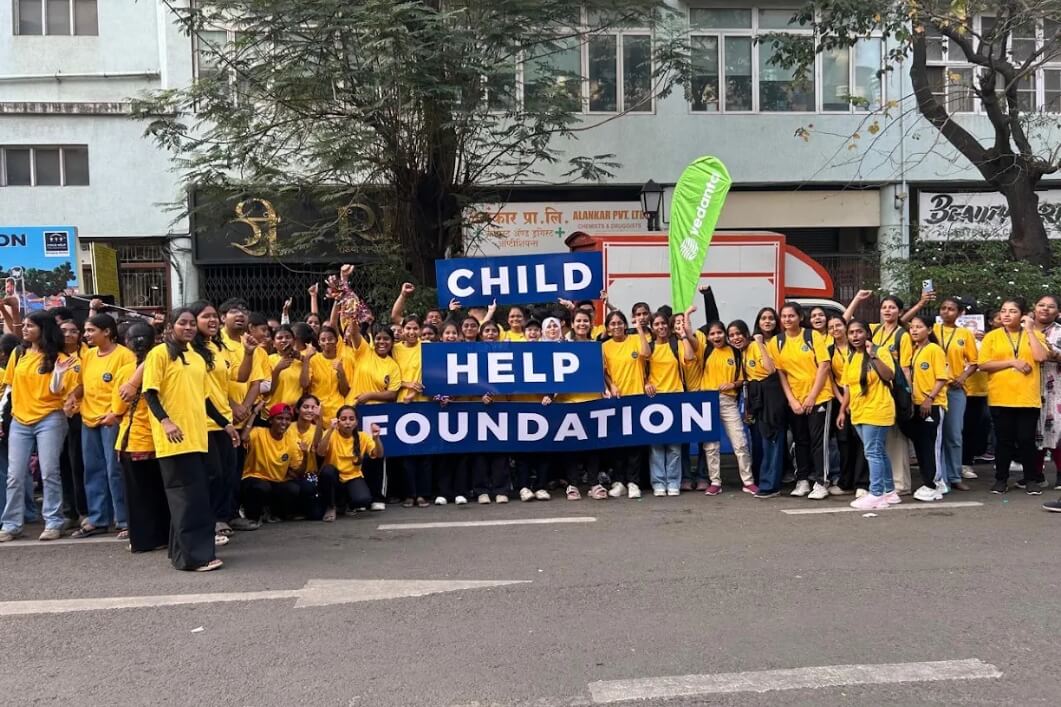
CSR compliance isn't just about writing a cheque. It's about picking a partner whose work is transparent, documented, and genuinely reaches the people it claims to. Child Help Foundation works with corporates on healthcare, education, sanitation, and community development projects, backed by proper 12A, 80G, FCRA, and CSR registration. If you're looking to fulfil your CSR obligation through real, on-ground impact for children across India, get in touch with our team.
FAQs
Does CSR applicability get checked every year, or is it a one-time thing?It's checked every single financial year. So even if your company was covered under CSR last year, you'll need to check the numbers fresh each year, and if you fall below the thresholds in a particular year, CSR isn't mandatory for that year alone.
Can CSR funds be used for activities outside Schedule VII?No, CSR spending is only valid if it falls under one of the categories listed in Schedule VII, such as healthcare, education, poverty eradication, or environmental sustainability. Activities outside this list don't count towards the mandatory 2%.
Does the CSR committee need to be involved in choosing the NGO partner?Yes, the company's CSR Committee is responsible for recommending the CSR policy and the projects or partners it will be executed through, and the Board must approve it before implementation.
Do we qualify for CSR?
Your company falls under Section 135 if, in the immediately preceding financial year, it meets any one of these thresholds:
- Net worth of ?500 crore or more
- Turnover of ?1,000 crore or more
- Net profit of ?5 crore or more
Even meeting just one of these triggers CSR applicability, and this includes private companies, listed and unlisted companies, and foreign companies with an Indian presence.
How much do we need to spend?
The rule is simple on paper: at least 2% of your average net profit from the last three financial years. This isn't your income-tax profit either, it's calculated as per Section 198 of the Companies Act, which excludes things like overseas branch profits and dividends from other Indian companies.
Can we partner with an NGO instead of doing it ourselves?
Yes, and most companies do. You can implement CSR directly through your own team, or through a registered implementing agency, which is usually an NGO in India. But not every NGO qualifies. To register as a CSR partner through Form CSR-1, an NGO needs to be:
- A Section 8 company, registered public trust, or registered society
- Holding valid 12A and 80G registration
- Active for at least three years with a documented track record
This is where choosing a trusted NGO in India matters. A genuine, well-established NGO for children in India or a child welfare NGO in India will already have this documentation in place, along with a proven history of executing projects in healthcare, education, or child welfare, categories that fall directly under Schedule VII.
What happens if we don't spend the full amount?Unspent CSR funds don't just disappear, there are clear rules:
- If tied to an ongoing project, funds must move to a separate Unspent CSR Account within 30 days of the financial year ending, and be used within three years
- If not tied to any ongoing project, funds must be transferred to a Schedule VII fund within six months
Missing either deadline can mean penalties for both the company and the officers responsible.
Why partnering with the right NGO makes this easier
CSR compliance isn't just about writing a cheque. It's about picking a partner whose work is transparent, documented, and genuinely reaches the people it claims to. Child Help Foundation works with corporates on healthcare, education, sanitation, and community development projects, backed by proper 12A, 80G, FCRA, and CSR registration. If you're looking to fulfil your CSR obligation through real, on-ground impact for children across India, get in touch with our team.
FAQs
Does CSR applicability get checked every year, or is it a one-time thing?It's checked every single financial year. So even if your company was covered under CSR last year, you'll need to check the numbers fresh each year, and if you fall below the thresholds in a particular year, CSR isn't mandatory for that year alone.
Can CSR funds be used for activities outside Schedule VII?No, CSR spending is only valid if it falls under one of the categories listed in Schedule VII, such as healthcare, education, poverty eradication, or environmental sustainability. Activities outside this list don't count towards the mandatory 2%.
Does the CSR committee need to be involved in choosing the NGO partner?Yes, the company's CSR Committee is responsible for recommending the CSR policy and the projects or partners it will be executed through, and the Board must approve it before implementation.
Do we qualify for CSR?
Your company falls under Section 135 if, in the immediately preceding financial year, it meets any one of these thresholds:
- Net worth of ?500 crore or more
- Turnover of ?1,000 crore or more
- Net profit of ?5 crore or more
Even meeting just one of these triggers CSR applicability, and this includes private companies, listed and unlisted companies, and foreign companies with an Indian presence.
How much do we need to spend?
The rule is simple on paper: at least 2% of your average net profit from the last three financial years. This isn't your income-tax profit either, it's calculated as per Section 198 of the Companies Act, which excludes things like overseas branch profits and dividends from other Indian companies.
Can we partner with an NGO instead of doing it ourselves?
Yes, and most companies do. You can implement CSR directly through your own team, or through a registered implementing agency, which is usually an NGO in India. But not every NGO qualifies. To register as a CSR partner through Form CSR-1, an NGO needs to be:
- A Section 8 company, registered public trust, or registered society
- Holding valid 12A and 80G registration
- Active for at least three years with a documented track record
This is where choosing a trusted NGO in India matters. A genuine, well-established NGO for children in India or a child welfare NGO in India will already have this documentation in place, along with a proven history of executing projects in healthcare, education, or child welfare, categories that fall directly under Schedule VII.
What happens if we don't spend the full amount?Unspent CSR funds don't just disappear, there are clear rules:
- If tied to an ongoing project, funds must move to a separate Unspent CSR Account within 30 days of the financial year ending, and be used within three years
- If not tied to any ongoing project, funds must be transferred to a Schedule VII fund within six months
Missing either deadline can mean penalties for both the company and the officers responsible.
Why partnering with the right NGO makes this easier
CSR compliance isn't just about writing a cheque. It's about picking a partner whose work is transparent, documented, and genuinely reaches the people it claims to. Child Help Foundation works with corporates on healthcare, education, sanitation, and community development projects, backed by proper 12A, 80G, FCRA, and CSR registration. If you're looking to fulfil your CSR obligation through real, on-ground impact for children across India, get in touch with our team.
FAQs
Does CSR applicability get checked every year, or is it a one-time thing?It's checked every single financial year. So even if your company was covered under CSR last year, you'll need to check the numbers fresh each year, and if you fall below the thresholds in a particular year, CSR isn't mandatory for that year alone.
Can CSR funds be used for activities outside Schedule VII?No, CSR spending is only valid if it falls under one of the categories listed in Schedule VII, such as healthcare, education, poverty eradication, or environmental sustainability. Activities outside this list don't count towards the mandatory 2%.
Does the CSR committee need to be involved in choosing the NGO partner?Yes, the company's CSR Committee is responsible for recommending the CSR policy and the projects or partners it will be executed through, and the Board must approve it before implementation.