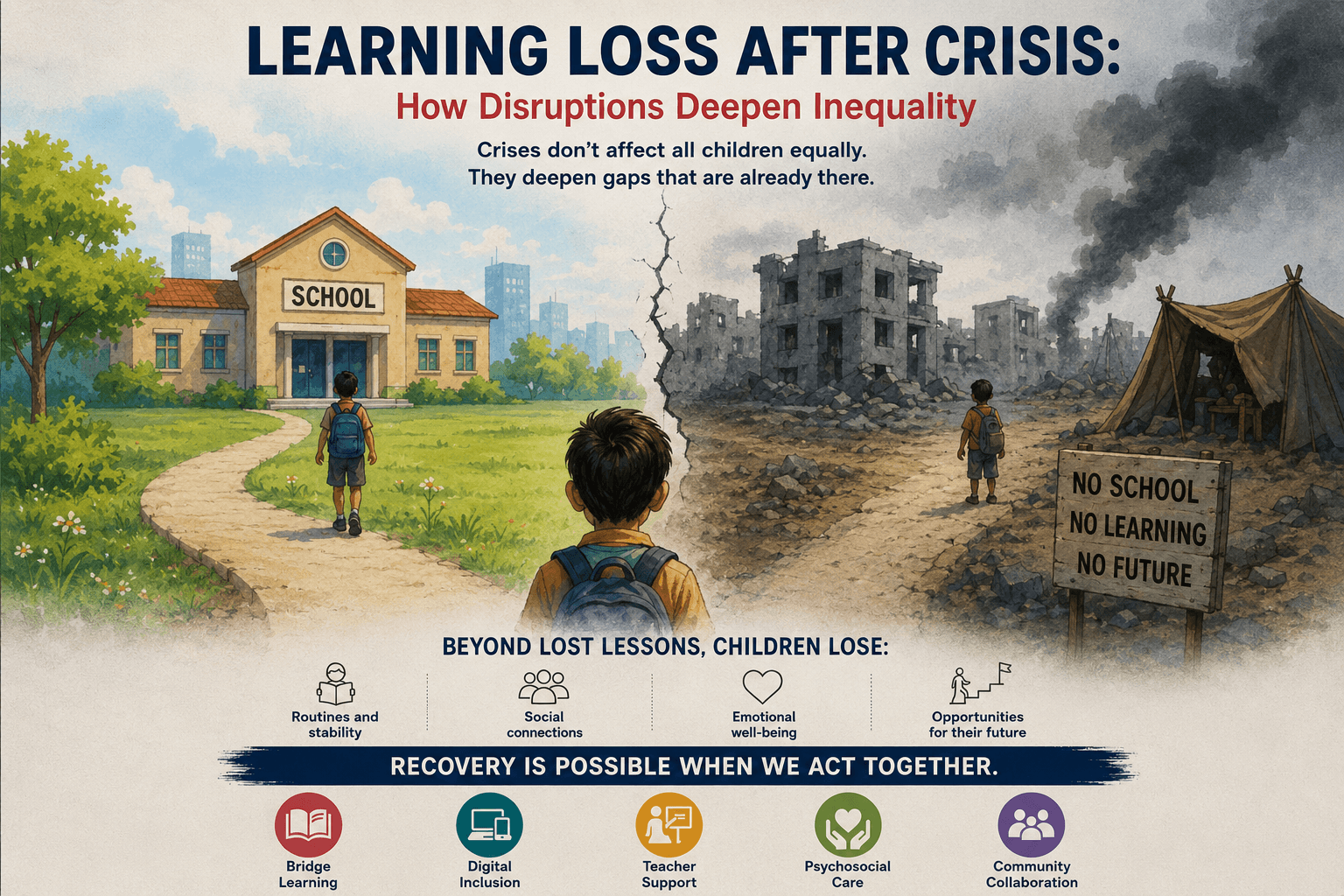
Education is more than reading textbooks or passing examinations; it is the foundation upon which children build their confidence, aspirations, and future opportunities. However, when crises such as pandemics, natural disasters, conflicts, or forced migration interrupt education, children often lose much more than classroom time. They lose routines, social connections, emotional security, and, in many cases, the chance to realise their full potential. For children from vulnerable communities, these disruptions can deepen existing inequalities, making it even harder to return to school and keep pace with their peers.
The COVID-19 pandemic demonstrated how quickly education systems can be disrupted. According to UNESCO, school closures affected more than 1.6 billion learners worldwide at their peak, exposing stark inequalities in access to education. Many children lacked internet connectivity, digital devices, or even a quiet place to study, causing significant learning loss that continues to affect students today. Research by the World Bank has also highlighted that prolonged learning interruptions can reduce future earning potential and widen educational disparities if timely interventions are not made.
Beyond pandemics, natural disasters such as floods, cyclones, earthquakes, and landslides frequently interrupt children's education. Schools may be damaged, converted into relief shelters, or become inaccessible due to damaged infrastructure. Families struggling to rebuild their lives often prioritise immediate survival needs, leaving education temporarily or permanently behind.
Similarly, migration caused by economic hardship or environmental challenges often forces children to move frequently, making continuous schooling difficult. Without proper support, these children face an increased risk of dropping out altogether. The effects of learning loss go far beyond academics. Young children may struggle to regain foundational literacy and numeracy skills, while older students often experience reduced motivation and confidence.
Extended breaks from school can also affect children's emotional well-being, increasing feelings of isolation, anxiety, and uncertainty. For many children, schools provide a safe environment where they receive not only education but also emotional support, nutritious meals, and opportunities for social development. When these protective spaces are disrupted, children become more vulnerable to exploitation, child labour, child marriage, and other forms of abuse.
Girls are often disproportionately affected during prolonged crises. In many communities, financial pressures may lead families to prioritise boys' education, while girls take on additional household responsibilities or are pushed into early marriage. Children with disabilities and those living in remote or marginalised communities also face greater barriers in accessing alternative forms of learning during emergencies, further widening educational gaps.
Addressing learning loss requires more than reopening schools. It calls for inclusive, child-centred solutions that help children recover academically while supporting their emotional well-being. Bridge learning programmes, remedial education, community learning centres, digital inclusion, teacher training, and psychosocial support all play an essential role in helping children regain confidence and continue their education. Collaboration between governments, schools, non-profit organisations, parents, and local communities is vital to ensure that no child is left behind during or after a crisis.
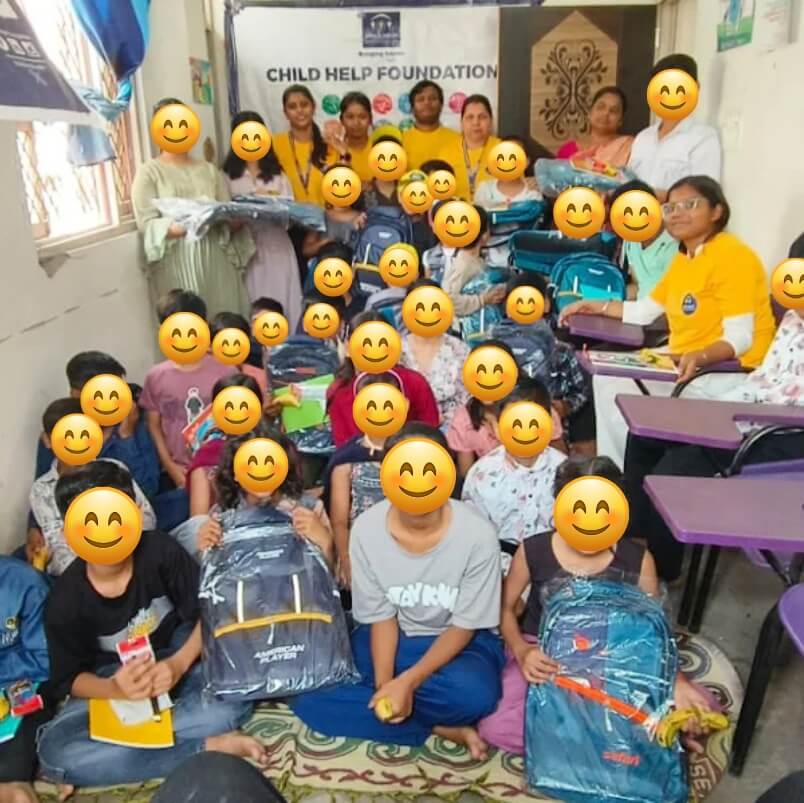
At Child Help Foundation (CHF), we believe that every child deserves uninterrupted access to quality education, regardless of the challenges they face. Through educational support initiatives, school outreach programmes, learning resource distribution, and awareness activities, CHF works to help children continue their educational journey and return to learning with confidence. Through educational support initiatives, school outreach programmes, learning resource distribution, and awareness activities, CHF works to help children continue their educational journey and return to learning with confidence.
Every crisis leaves a mark, but it should never determine a child's future. By investing in resilient education systems, supporting vulnerable families, and creating opportunities for children to recover lost learning, we can reduce inequality and build stronger communities.